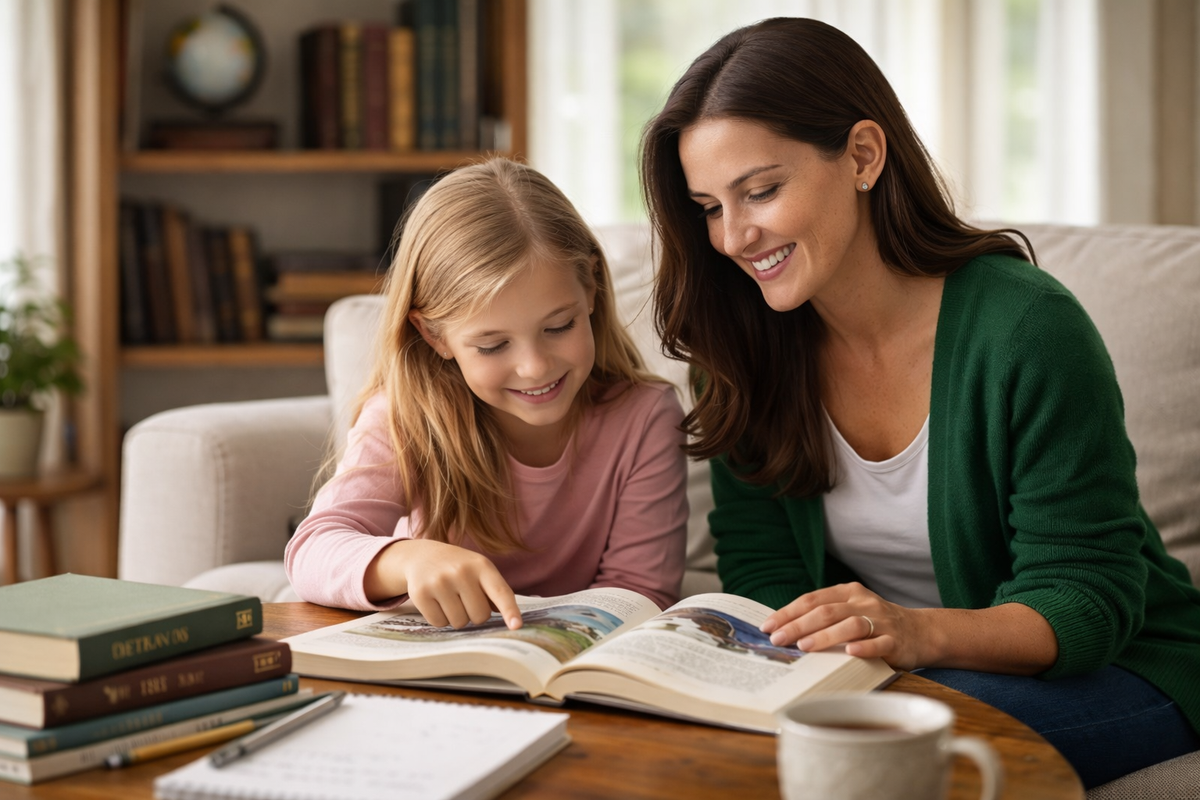
Lower Grammar (K–5th)
Younger children are natural memorizers. They absorb songs, chants, and stories effortlessly. The grammar stage plants the seeds: phonics, vocabulary, Latin chants, history songs, and the rhythms of great literature.
Purchasing for a school?Click here to learn more.
The time-tested way humans were educated for over two thousand years, and the tradition families are returning to today.
Classical education is a centuries-old approach to learning that pursues truth, goodness, and beauty through the study of the liberal arts and the great books. It is a vast museum of wonder-filled rooms that a student can explore over a lifetime.
It is the kind of education that shaped Western civilization for more than two thousand years. It diminished in the early twentieth century with the rise of progressive schooling, but it never disappeared. Over the last forty years, it has been quietly returning.


Classical education is rooted in the pursuit of truth, goodness, and beauty. It draws on the time-tested tradition of the liberal arts to pass on what is most worthwhile from one generation to the next.
The result is a student who grows not only in knowledge, but in character, clarity, and confidence. Children move through this path naturally, in stages that match how they actually develop.
In grammar, phonics, and memory work that last a lifetime.
Through stories, songs, and rich language in the early grammar years.
That integrates knowledge, character, and a love of what is true, good, and beautiful.
Regardless of personality or learning style, children move through three natural stages of development. Classical education aligns teaching with each stage rather than fighting against it. This three-part path is called the trivium, Latin for "the three roads."
Younger children are natural memorizers. They absorb songs, chants, and stories effortlessly. The grammar stage plants the seeds: phonics, vocabulary, Latin chants, history songs, and the rhythms of great literature.
Younger children are natural memorizers. They absorb songs, chants, and stories effortlessly, and what they learn at this age stays for a lifetime. The grammar stage plants the seeds: phonics, vocabulary, Latin chants, history songs, and the rhythms of great literature.
By the high-school years, students are ready to express what they have learned. The rhetoric stage trains them to communicate with clarity, force, and grace, in writing and in speech, joining the great conversation of ideas as full participants rather than spectators.
Whether you're brand new or ready to go deeper, here's your next step.
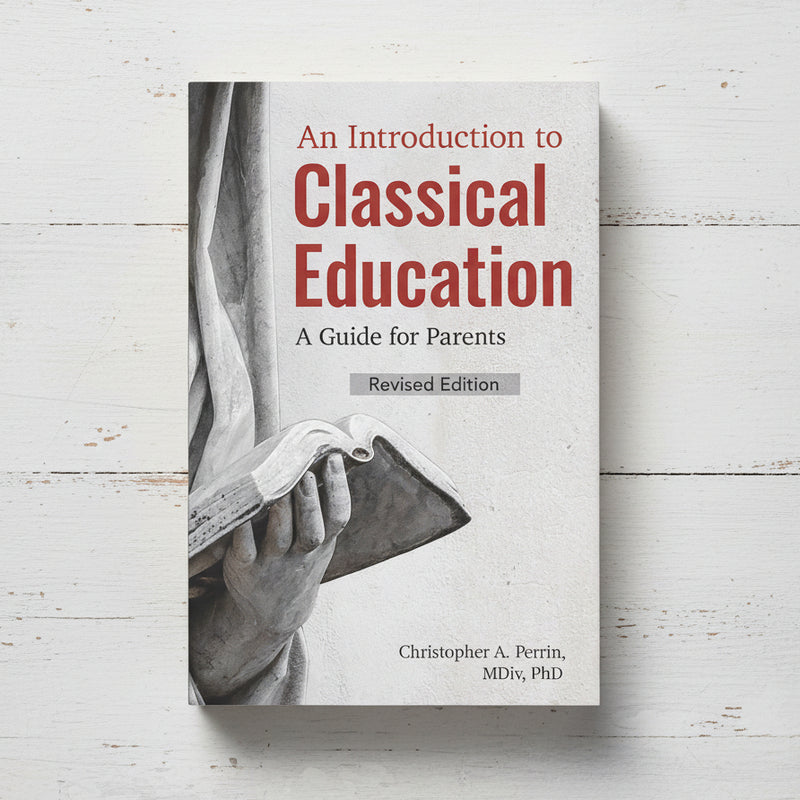
New to classical education? Start here. A simple, clear introduction to how it works, and why it works.
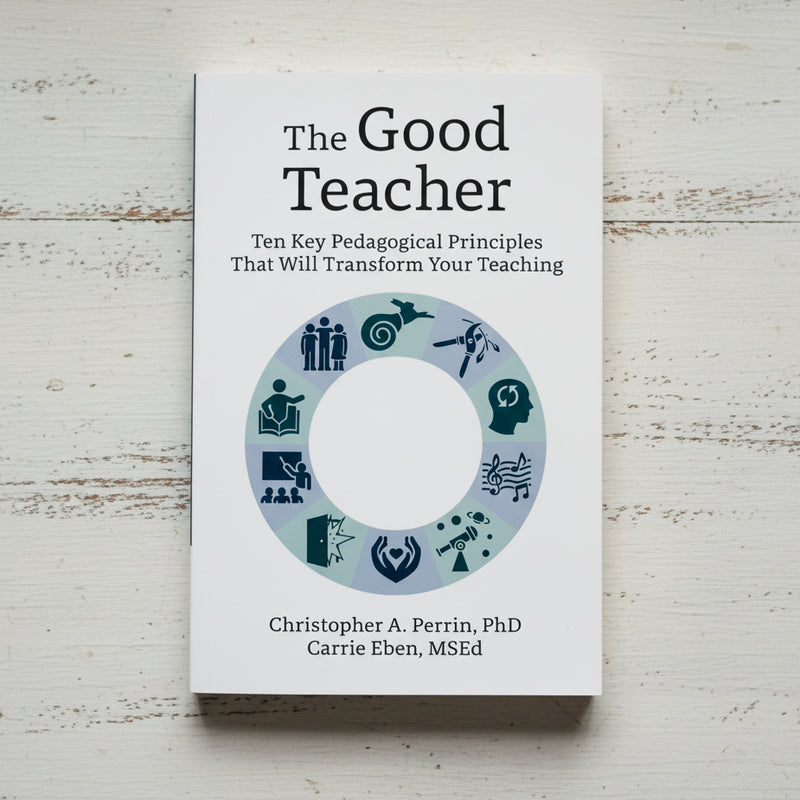
Already curious? Learn how to actually teach this way, step by step, with confidence.
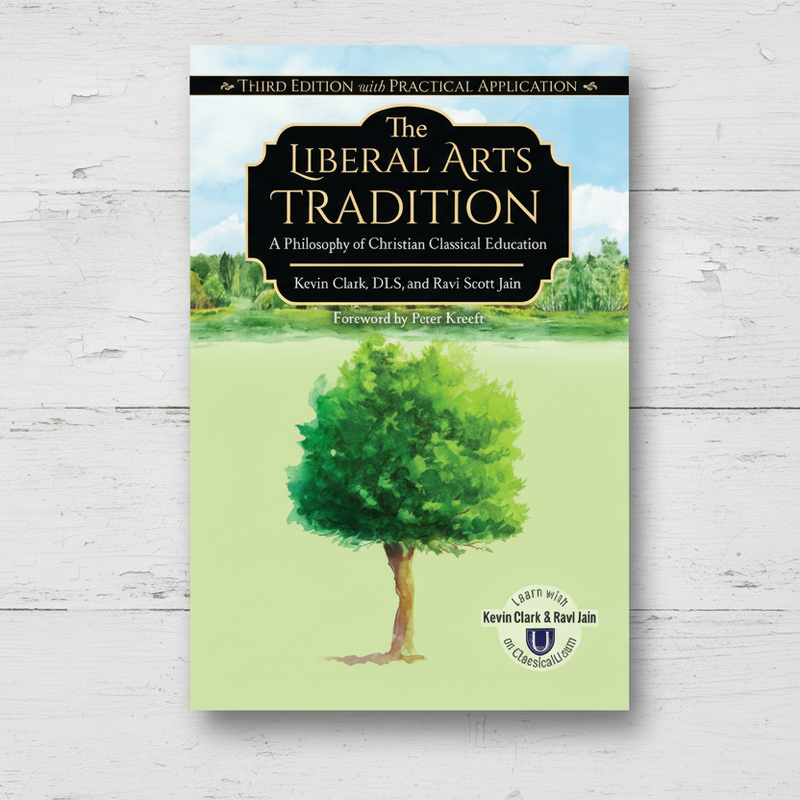
Ready to go deeper? Explore the rich philosophy behind classical education
Classical education has formed thoughtful, capable, and virtuous men and women for centuries. Its benefits are not a marketing claim; they are visible in the lives of the students it has produced. Here is what families can expect.
The logic stage isn't decorative. Students who have studied formal and informal reasoning can identify a fallacy, evaluate a claim on its merits, and follow an argument without losing their footing. This is the difference between thinking about something and thinking well about it.
Classical students grow up among great books, learn grammar deeply (often through Latin), and practice writing as an art form. The result is the ability to read carefully, write clearly, and speak with precision, skills that serve every career and every relationship.
Classical education has always understood that the goal is not merely a clever student but a good person. Through great literature, the example of admirable lives, and the practice of attentive habits, students are formed in virtues like courage, justice, prudence, and temperance.
Students who have read Homer, studied the founders, and traced the development of Western thought can locate themselves in a long human conversation. They are not strangers to their own civilization. They can argue with the past, and learn from it.
Classically educated students consistently perform well on the SAT, the CLT, and college coursework, but the deeper preparation is for life beyond a transcript. They have learned to learn, which means no field is closed to them.
Perhaps the most lasting benefit is also the hardest to measure. Classical students often emerge from their schooling not exhausted by it but in love with it: with books, ideas, languages, and questions. They become lifelong readers and learners. This is what the ancients called scholé: restful, unhurried delight in things worth knowing.

Classical education is not a single institution. It is an approach, and it adapts to many settings.
Homeschooling families who want to give their children a deep, beautiful education at the kitchen table, including parents learning alongside their children.
Classical Christian and classical charter schools. A national movement of more than 1,500 schools using CAP curricula in classrooms across the country.
Families supplementing a traditional school with classical languages, logic, or great books at home, often through live online classes from Scholé Academy.
You do not need to be a Latin scholar to begin. You need only to be willing to learn, and to know where to start.
Wondering what classical education is versus modern education? Here's a quick breakdown.
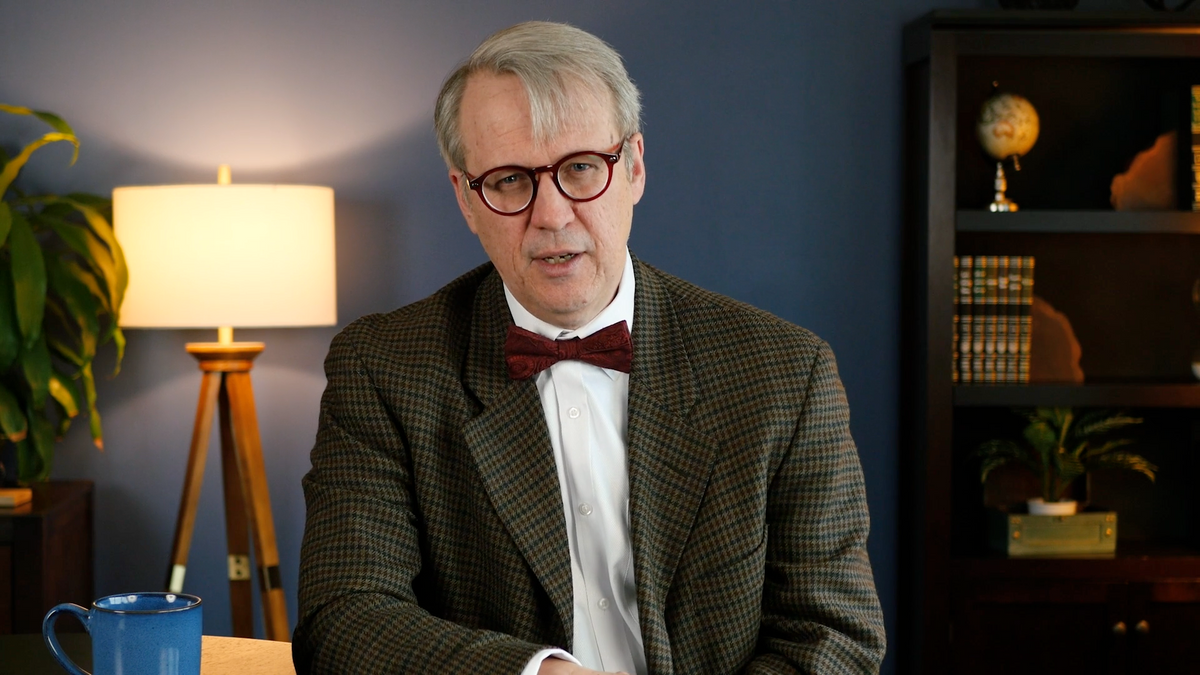
Watch Dr. Christopher Perrin introduce the philosophy and practice of classical education.
It's the opposite. The methods of classical education were the standard in the Western world from Plato through the early twentieth century. They only fell out of fashion about a hundred years ago. What's "outdated" is recent. Families are returning to classical education precisely because the modern alternative has not delivered on its promises, while the classical approach demonstrably has, for thousands of years.
No. Classical education was designed as a universal education, not an elite one. It was the standard curriculum for ordinary citizens through most of Western history. The structured progression of the trivium actually serves struggling learners well by building strong foundations before moving to abstract reasoning. Classical schools and homeschools include children across the full range of ability and background.
Not at all. CAP's Latin curricula, including Song School Latin and Latin for Children, are written specifically for parents who never studied Latin themselves. They include video lessons taught by experienced classical teachers, so you can learn alongside your child. Tens of thousands of families have done exactly that.
Rigorous, yes. Harsh, no. There is a long tradition within classical education called scholé, which means "restful learning." The goal is not exhausting students but forming them, which means going deep rather than wide, taking time with what matters, and protecting space for wonder. Done well, classical education is genuinely joyful.
Classical education itself predates Christianity. It began with the Greeks and Romans. However, much of the modern classical renewal in America has happened within Christian schools and homeschools, because the classical pursuit of truth, goodness, and beauty resonates strongly with Christian formation. Classical Academic Press serves both Christian classical schools and homeschools, and our materials are used in classical charter schools that are not religious.
All three traditions value formation over standardization, and they share more than they differ on. Charlotte Mason emphasizes "living books," nature study, and short lessons. Montessori emphasizes self-directed learning in carefully prepared environments. Classical education emphasizes the liberal arts, the great books, and the developmental trivium. Many families blend approaches, using a classical curriculum with Charlotte Mason's reading philosophy, for instance.
Any age. Younger children naturally inhabit the grammar stage, so beginning in kindergarten or first grade lets you take full advantage of how they learn. But families regularly begin classical education in middle or high school as well. It's never too late to read great books, learn Latin, or study logic. Start where your child is.
Start with An Introduction to Classical Education: A Guide for Parents for a clear, accessible overview. From there, The Liberal Arts Tradition goes deeper into the philosophy. Awakening Wonder explores the role of truth, goodness, and beauty. ClassicalU.com offers self-paced courses for parents and teachers who want practical training on their own schedule.
Whether you're starting your first classical curriculum or going deeper into the tradition, we're here to help. Or, request a free catalog.